When Parenting Feels Heavy Try This
Andrea Robbins • January 13, 2026
How play helps you connect
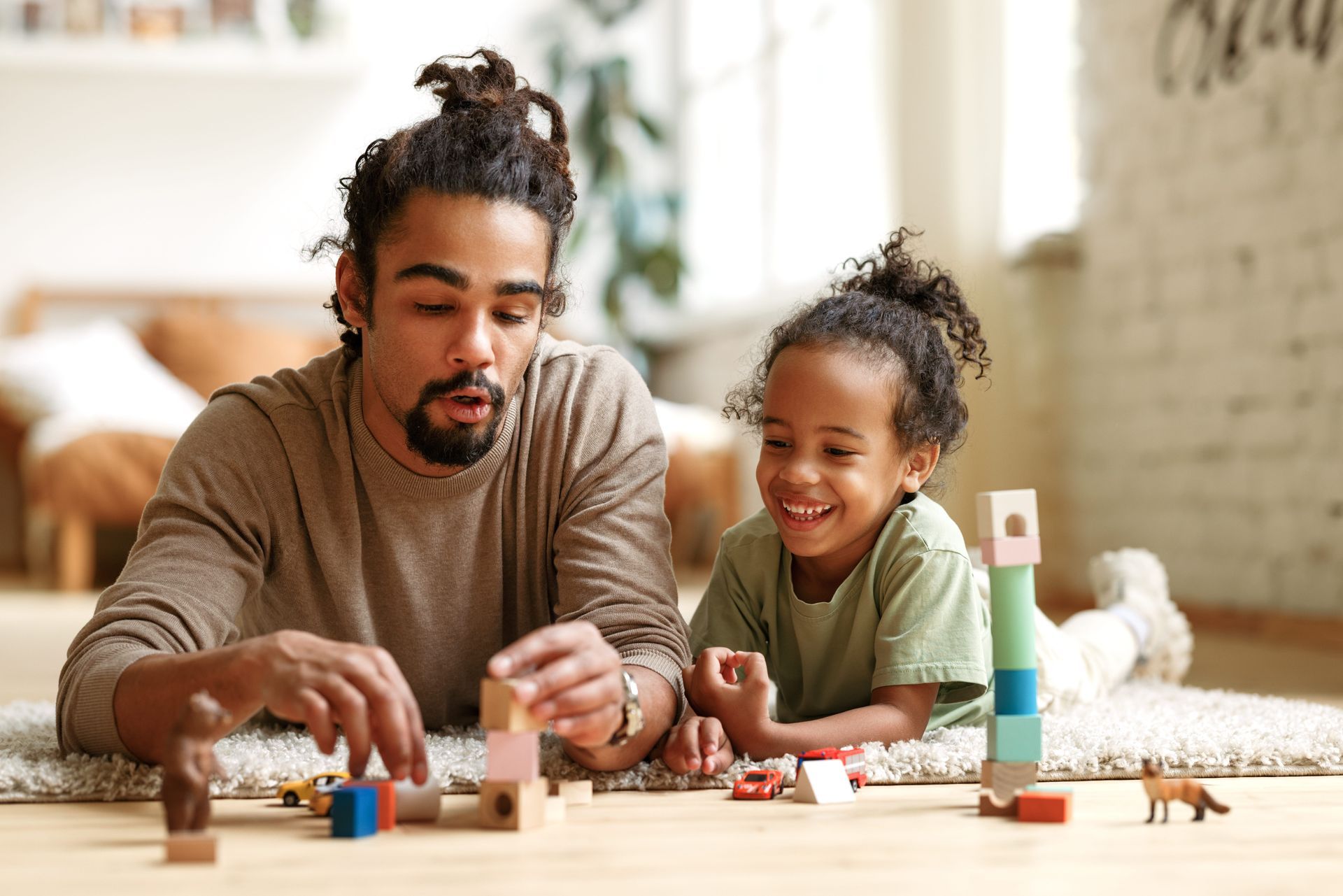
When parenting starts to feel tense, loud, or stuck, our instinct is often to tighten control.
We explain more.
We repeat ourselves.
We push harder.
But when emotions are high, more pressure usually creates more resistance.
There’s another option that often works better, especially in the moment.
Play.
Not big, elaborate play.
Not crafts or activities or anything you have to prep (although that could work too).
I’m talking about using playfulness to lighten the moment and reconnect.
Because when things feel heavy, play does something powerful:
It lowers stress, softens defenses, and reminds your child you’re on the same team.
Here’s what that kind of play can actually look like in everyday life:
Getting dressed:
You “accidentally” put the shirt on your head and act confused.
You race the sock to their foot.
You use a silly voice.
Leaving the house:
You march to the door like robots.
You pretend the floor is lava.
You whisper everything like it’s a secret mission.
Homework resistance:
You race to the table
You set a five-minute challenge and see how much you can get done.
Bedtime:
Stuffed animals tuck them in. Read them a story
You dramatically forget the bedtime routine.
You walk to the bedroom in slow motion like it’s the hardest journey ever.
Big feelings:
You ask, “If this feeling were an animal, what would it be?”
You draw the feeling together.
You act it out: no fixing, just noticing.
This kind of play isn’t about ignoring behavior.
It’s not about avoiding boundaries.
It’s about resetting the tone.
Play says:
“I see you.”
“I enjoy you.”
“You’re safe with me.”
And when kids feel safe and connected, cooperation comes more easily.
You can always circle back to the boundary.
But connection makes it possible for the boundary to land.
So the next time you feel the tension rising, try this:
Before you correct, connect.
Sometimes five playful minutes can change the entire moment.
And that’s not a parenting trick.
That’s relationship-building.
If you’re craving calmer days, fewer power struggles, and more connection, but aren’t sure how to make that happen consistently, I’d love to support you.
👉 You can schedule a free consult call
to talk about what support might look like for your family.
Best,
Andrea Robbins, M.Ed | Parent Coach | Parenting Vistas

What your child is trying to tell you without words

How to build resiliency

Help your child repair and learn from mistakes

There's a reason why your child does better on school days
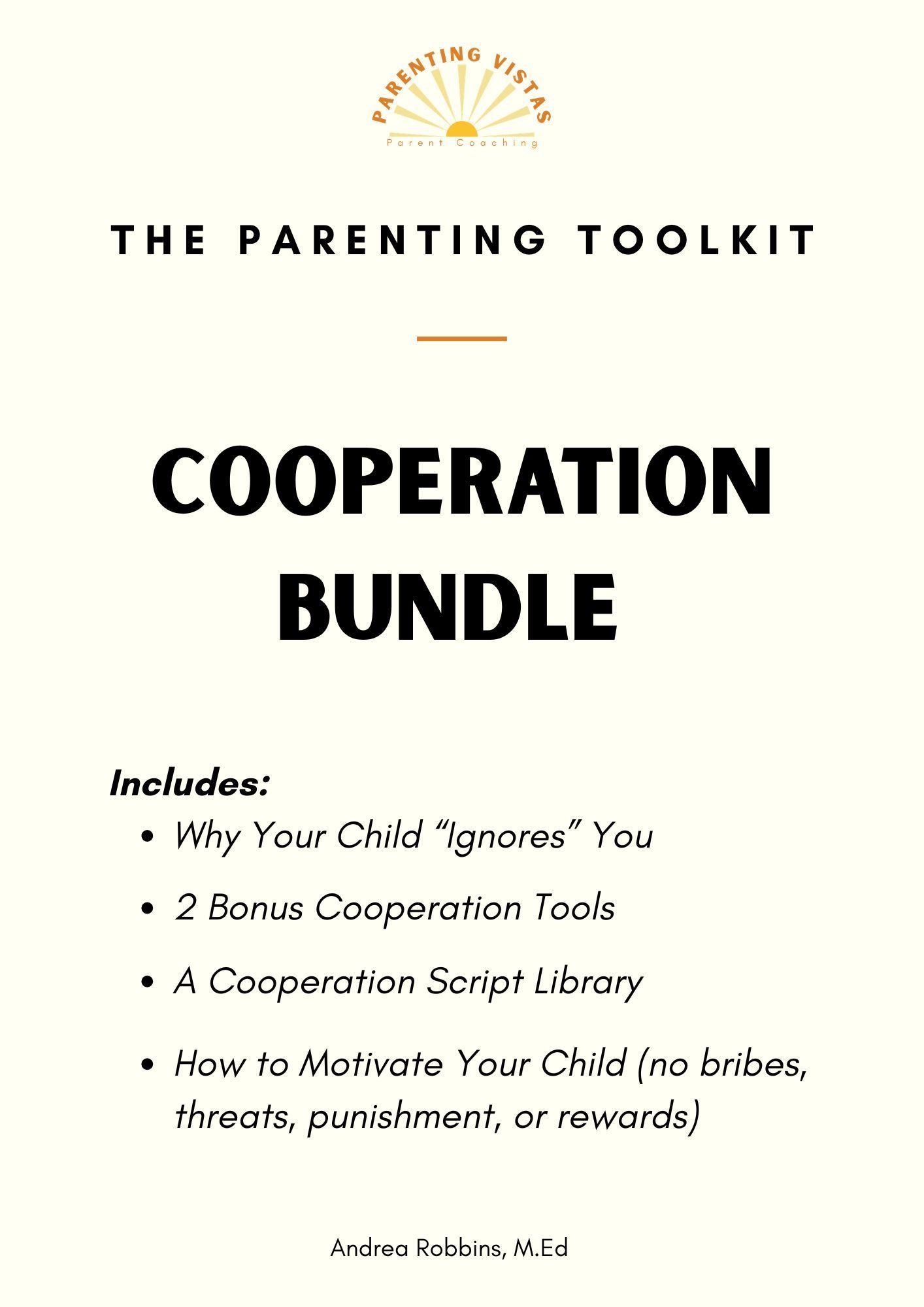
I'm really excited to share something new I've been working on! I'm creating a Parenting Toolkit , and the first resource of the bunch, The Cooperation Playbook, is finally here! The idea rose from my work with parents, where I kept seeing the same need: parents who want practical tools they can use in the moment, something they can easily access when they're completely overwhelmed and wondering, "What now?!" If you're a parent who is tired of repeating yourself (only to have your child still not listen) and getting stuck in power struggles, this is for you. In the Playbook , I break down the challenges behind your child not listening. Here you'll learn 6 tools to meet your child where they are, hold boundaries, and gain cooperation without yelling, threats, bribes, or rewards. You can find The Cooperation Playbook here or The full Cooperation Bundle here. The bundle includes: The Cooperation Playbook (11 pages), 2 bonus cooperation tools, a cooperation script library, and a guide on how to motivate your child for lasting cooperation I'm happy to answer any questions; you can respond directly to this email. Warmly, Andrea Robbins, M.Ed | Parent Coach | Parenting Vistas

Tips for a smoother start

What Charlie Brown was Trying to Tell Us

...and how it relates to parenting

The dreaded public meltdown
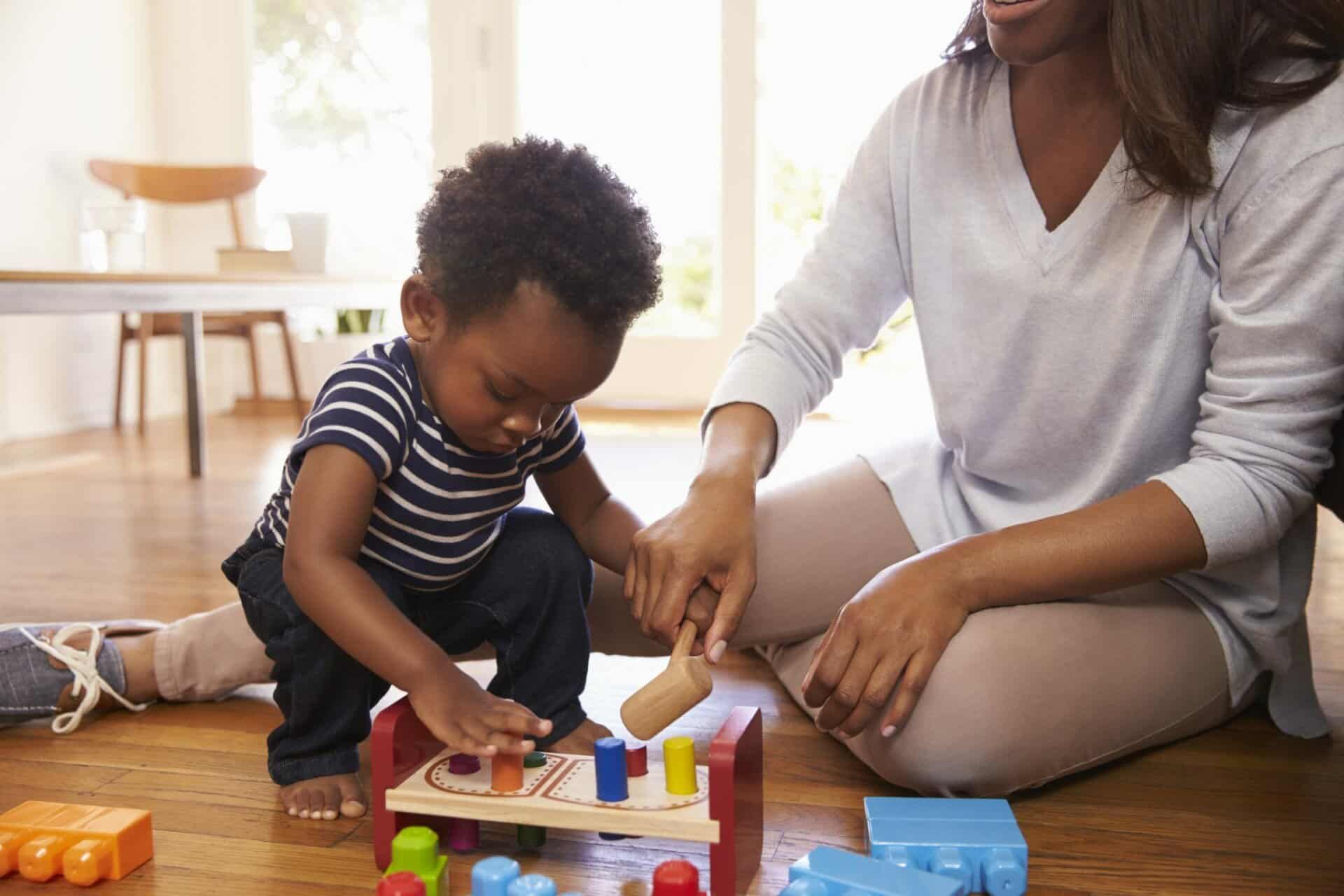
5 Simple Ways to Connect With Your Toddler (That Actually Leads to Cooperation and Resiliency) Connection isn’t something extra to do when there’s “time”. It's something you build into your everyday moments, and it’s what makes everything else work. 1. Get on their level Sit on the floor, make eye contact, and enter their world. This instantly decreases power struggles and invites connection (and cooperation) 2. 10 minutes of “Special Time” Let your toddler lead the play. No phone. No directing. Even 10-minutes of child-led play will fill their connection cup 3. Narrate: “I see you” “You're stacking the blocks so tall.” This helps your toddler feel seen and builds language at the same time. 4. Make transitions playful Transitions are hard for many toddlers, and they will resist being met with control. Toddlers typically respond better to connection and playfulness. This will lower resistance instantly. “Can you hop like a bunny (stomp like a dinosaur) to put your shoes on (brush your teeth)?” 5. Redo & Repair When things go off the rails, “Want a do-over?” “Can you try asking me again?” We all lose it sometimes, “I don’t like how I yelled. I’m working on staying calm.” These allow for learning from mistakes and building skills without shame. “Perfect” parenting is never the goal, but authentic parenting is. If you want to parent this way, but find yourself getting stuck in the moment, that's exactly what I help with in my program. Come join!